1. Between Nov 27 to 29 (Day 44 to 46), we visited Sumbawa, an island east of Lombok, 1.5 hr away by ferry. We had originally planned to stay 3-4 days, but ended up staying 3. After Sumbawa, we planned to return to Lombok and not go further east to Flores. Li Hoon was not keen to subject herself to 8 hours of ferry ride to Flores. Also, it would be quite a stretch with only me driving.
2. Sumbawa is bigger than Bali and Lombok combined. Its 1.5 mil population is largely Muslim. Historically, 2 major linguistic groups dominated the island. One group centered in the western side of the island speaks Basa Semawa, which is close to the language spoken in Lombok; the second group in the east speaks Nggahi Mbojo, a very different language. Sumbawa Besar in the west and Bima in the east, the 2 largest towns on the island, are the focal points of Sumbawa.

3. The ferry to Pato Tano on the west coast of Sumbawa was really quite easy; paid the ticket at the gate and we were directed into the ferry. The car deck of the ferry was one-third full. The ferry was clean. It looked new. One way ticket was 322 Rp (about US$30+) for the car (and the

passengers inside). The ferry departed Lombok at about 2 pm. We had a great view of Mt Rinjani as the ferry headed west towards Sumbawa.
4. Sumbawa looked beautiful, with mountains in the horizon and offshore islands in

the foreground fringed with strips of white beaches, set against the sky and sea in different shades of blue, increasing the level of anticipation as the ferry approached Pato Tanto. As we approached the shoreline, we could see that the hills looked bare and dry, void of vegetation.
5. Over the 3 days, we traveled from Pato Tano to Sumbawa Besar, some 72 kms away, 1.5 hr drive; another 200+ km to Lakey Beach, along a scenic drive along the coast near the neck of Sumbawa and after venturing northwards towards Calabai for about 2 hrs and then deciding to give up and backtrack; and exploring the very challenging 120 km coastline NE of Dompu through towns such as Soromandi and Kilo which we didn't expect to be this tough.
6. Over the 3 days, we stayed at Laguna Biru (300 000 Rp, about US$ 33), reputedly one of the better hotels in Sumbawa Besar, located on a hill overlooking the port; at Aman Gati (235 000 Rp, about US$26), certainly the best hotel at Lakey Beach; and Samada Hotel (110 000 Rp, about US$12), again reputedly the best hotel in Dompu.
7. Overall, our observations of Sumbawa are as follow:
(a) Other than the Newmont mines, Sumbawa's economy appeared to be largely fishery and agriculture-based. Along the roads we traveled, we could see miles and miles of agriculture land, and from time to time, passing through fishing villages. The 2 Aussie Newmount expatriates we met at Laguna Biru told us that they mine for gold and copper in Sumbawa.
(b) The agriculture land we saw was mostly brown and dry, especially in western Sumbawa, in what looked like dried paddy fields; in great contrast to the green paddy fields we saw in Bali and Lombok. A local told us that it gets drier as one moves from west to east from Bali.
(c) Quality of the main road, from Pato Tanto to Dompu to Bima, was

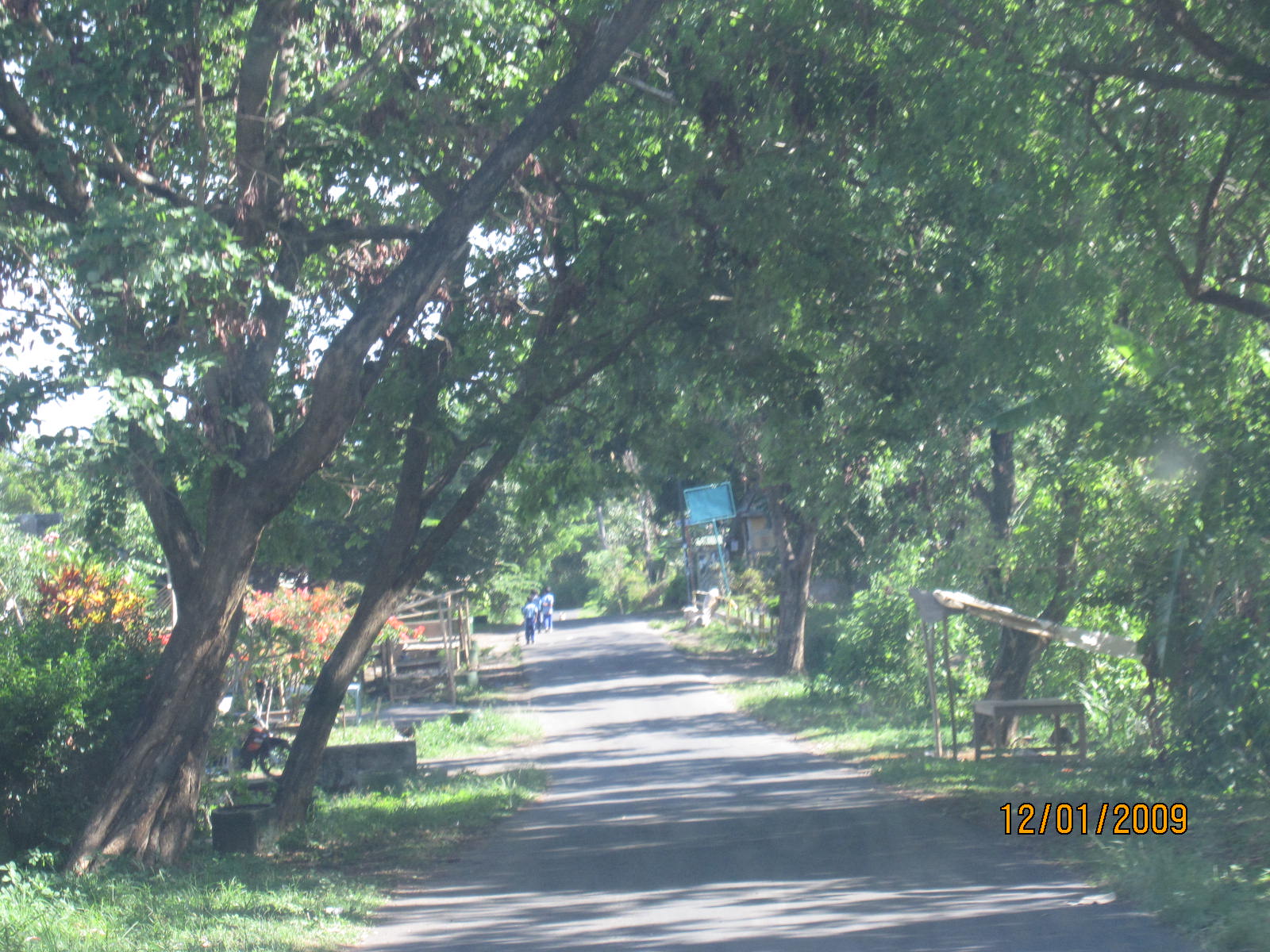
really quite good; sealed, mostly one way either way. Normal cars should have no problem. Off the main trunk road, it is less predictable. We tried traveling north to Calaibai, a town opposite Moyo island where Amanwana is located, and after a short stretch the road became very challenging and we gave up and backtracked. The coastal loop we took on the 3rd day to Soromandi and Kilo was about 120 km and it took us half a day. Without a 4x4, we would not have survived. It went from a relatively good road to what looked like a pedestrian trail.
(d) Sumbawa has significant tourism resources that have yet to be developed. It has a beautiful coast line, with many pretty beaches that are not developed. Other than Amanwana on Moyo island (

the Aman resort that few can afford)and Lakey Beach (for surfers), we are not aware of other tourist destination. The tourism industry was practically non existent. Hotels were not easy to find in Sumbawa. If you find them, they are likely to be in the main towns like Sumbawa Besar, Dompu and Bima, the 3 largest towns in Sumbawa; and

be

prepared that they are likely to be very basic and we were already staying in the better hotels. The hotel we stayed in Dompu did not have power and water until 10 pm and it did not provide towel or soap. Lakey beach was reputedly to be a good surfers destination. Yet, other than the few basic hotels along the beach, there was really nothing else there. In the 3 days we were in Sumbawa, we met a few expatriates, but did not encounter any tourist. It was so unlike Bali which was overcrowded with tourists, or for that matter Lombok which was becoming crowded in some areas. It is however an opportunity to develop tourism sensitively while keeping its authentic charm.
(e) We did not see any slum in Sumbawa. In rural areas, they lived in stilt wooden houses or in brick houses for the richer ones, but they all


seemed to have their own homes. People were hospitable and helpful and cheerful. Kids, like kids elsewhere, have their fair share of fun. We were there on weekend and we could see many families, especially the kids, enjoying themselves on the beach and in the water. Unlike some cities in Java, or even in Bali, where we encountered beggars at traffic junctions or along the roads, we did not encounter any at all in Sumbawa.
8. Over the 3 days, we had a number of memorable moments that would remind us of Sumbawa for a long time to come:
(a) We had a wonderful Ikan Bakar at a fishing village called Goa, not

far from Laguna Biru. Li Hoon asked one of the hotel staff direction to a Ikan Bakar 99 restaurant mentioned in Lonely Planet. With our clumsy dialogue, he thought we were just looking for ikan bakar and led us on his motorbike to this coastal fishing village where they were many ikan bakar stalls. It was


obviously a local destination and we were the only 2 foreigners there. At the stall, some 8-10 ladies came to join us. They were obviously curious about these 2 foreigners in a car with foreign number plate. They were very friendly. We communicated in a mix of broken Bahasa and broken English. Somehow we seemed to understand each other. Or least we thought. Ikan Bakar is really BBQ fish. We had a fish and 2 cuttle fish, with their wonderful chilli sauce for 40 000 Rp (about US$4+). But, it was the really the fun of talking to the local ladies that was fun and

memorable. They had no hesitation wi

th foreigners, very friendly and curious.
(b) From Besar to Dompu, especially the coastal stretch at the neck of Sumbawa, the coastal

scenery was spectacular. The road curved up and down the hills near the coast and in the many bays we passed there were beautiful beaches, fishing villages and fish ponds. The area have all the physical attributes of Monterrey Bay in California.
(c) The very challenging drive from Dompu to Soromandi and Kilo. There were anxious moments as we traversed the ravines and streams. We were hoping for the road to improve but it
s

eemed to get

from bad to worse, deteriorating into a pedestrian trial at one point. On hindsight, we were stretching our luck. We were lucky nothing happened. The

Pajero performed well. As we

were in the middle of nowhere, we cooked for ourselves instant noodle for lunch near the coast and comfortably seated in Yeow Pheng's foldable chairs.
(d) It was raining when I stopped at Soromandi to ask for direction from this group of kids. The teenage girl in the picture spoke a little

English and with my broken Bahasa we communicated. Soon, 2 adults joined us. They were all soaking well but it did not bother them. One of the boys, probably 8-10, was completely naked. I gave my Mt Bromo T-shirt to this boy. Couple of other boys were only in their pants. They were very friendly and helpful, telling me
hati hati, be careful, as we departed for Kilo.
9. I was happy we made the trip to Sumbawa as it was a chance to see another part of Indonesia, a largely Muslim population but distinct ethnic groups. For tourists, Sumbawa is still unspoilt, but not comfortable by international standards. Sea related activities would be wonderful, like surfing, fishing, snorkeling and diving. For this reason, I suppose that's why Aman has a resort on Moyo. For those who like to explore and do not mind some discomfort, Sumbawa offers some interesting opportunities. From tourism perspective, much more can be done.
 s at Lovina Beach. We struck up a conversation as they were curious about what a Singapore car was doing in Bali. David was obviously a competent photographer as some pictures and videos taken of the dolphins at Lovina Beach were really good. David and Jeev had been on the road on holiday for 4 months, including a trip to Tibet and Nepal and sharing with us their interesting experiences.
 coral bits, fairly clear water and we can see small fishes scattering in different directions as we waded through the shallow water. The hotel had a nice pool and we took a dip before dinner at the hotel.
 traditional wooden boats
 with an outrigger on each side. There were already boats ahead of us. As we traveled out, sun was just arising above the gunungs behind us, and I could count 32 boats (or dots) racing out to the more open sea, presumably to see dolphins too.
 sightings were between 7 to 7.30 am, when we headed back to the shore. We were all very excited when we saw the dolphins leaping out of the water, as if they were playing in the morning, leaping out in pairs at times. I was only able to catch the dolphins in videos and here is one of them.
 them. There were about 30 boats and this was low season. Can't imagine how the scrambling would be like during peak season. This is no better than paparazzi stalking celebrities. And we get unhappy when peddlers become aggressive pushing their wares and services at tourist sites. I left feeling great sympathy for the beautiful and graceful creatures.


 eastwards along the north coastal road, turning south at Singaraja up the mountain towards Kintamani for Gunung Batur (1717 m), an active volcano. Gunung Batur and Danau Batur are located in a 18 km wide spectacular caldera northwest of Gunung Agung. The rim of the caldera has a number of favorite spots
 near Kintamani where tourists would stop to take pictures of the spectacular views. And there were many tour coaches and vans there when we passed them.
 Bungkah which was at the
 end of the west route. The narrow road was flanked by dark volcanic rock formations, probably solidified from lava flow down the slopes from
 various eruptions, the last 2 eruptions about 100 years ago, in 1916 and 1927. At the end of the road was Toya Devasya Resort & Spa, where the water for the 3 pools was from natural hot spring. We decided to pay 150 000 Rp (US$16) each for lunch and for the use of the pool. From the resort, we had a great view of Lake Batur and
 the rim of the crater. When Fangping saw this picture, she exclaimed, "I never thought I looked so much like pa".